Share

Common Snapping Turtle
🔤 Taxonomy
Chelydra serpentina is the currently accepted scientific name.
Common names used in the hobby:
- Common snapping turtle
📌 Description
A large, defensive North American aquatic turtle that needs expert containment, excellent filtration, cool-water options, and no routine handling.
Adult size is usually about 25-50 cm, with large differences caused by sex, origin, age, and condition. This article treats the species as a long-term specialist animal rather than a short-term beginner pet.
🌍 Distribution
It is native to ponds, lakes, marshes, slow rivers, and muddy wetlands across much of North America.
Indoor care should focus on the habitat choices the turtle can actually use: safe heat, retreat access, secure boundaries, clean water or dry substrate as needed, and seasonal stability without forcing wild extremes indoors.
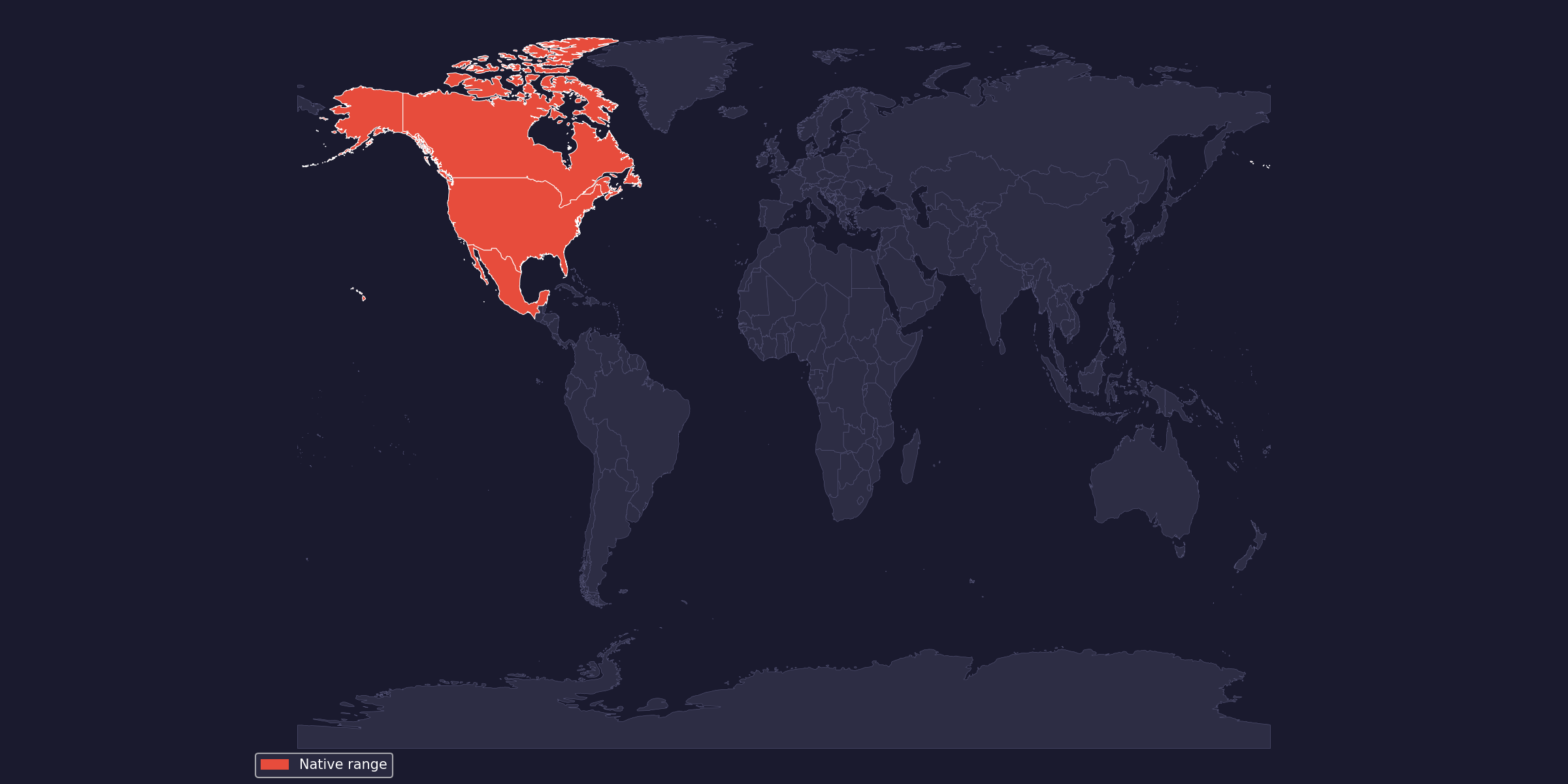
🌡 Climate across the native range
Monthly climate normals from reviewed GBIF occurrence locations:
Connecticut — United States of America
| Month | Min °C | Mean °C | Max °C | RH % |
|---|---|---|---|---|
| January | -8.3 | -3.4 | 1.4 | 71 |
| February | -7.2 | -2 | 3.2 | 66 |
| March | -2.6 | 2.8 | 8.3 | 62 |
| April | 2.6 | 8.7 | 14.8 | 60 |
| May | 8.2 | 14.7 | 21.1 | 64 |
| June | 13.1 | 19.3 | 25.6 | 70 |
| July | 16.2 | 22.2 | 28.2 | 71 |
| August | 15.5 | 21.3 | 27 | 74 |
| September | 11.2 | 17 | 22.8 | 75 |
| October | 5 | 10.9 | 16.8 | 71 |
| November | 0.5 | 5.5 | 10.6 | 71 |
| December | -4.9 | -0.3 | 4.3 | 70 |
Tennessee — United States of America
| Month | Min °C | Mean °C | Max °C | RH % |
|---|---|---|---|---|
| January | -3.3 | 2.1 | 7.6 | 77 |
| February | -1.7 | 4.4 | 10.6 | 70 |
| March | 2.8 | 9.4 | 16 | 66 |
| April | 7 | 14.2 | 21.4 | 64 |
| May | 12 | 18.9 | 25.7 | 71 |
| June | 16.9 | 23.4 | 29.9 | 72 |
| July | 19.4 | 25.7 | 31.9 | 72 |
| August | 18.5 | 24.9 | 31.4 | 72 |
| September | 14.7 | 21.5 | 28.3 | 71 |
| October | 7.5 | 15 | 22.4 | 69 |
| November | 2.8 | 9.3 | 15.8 | 71 |
| December | -1.2 | 4.6 | 10.4 | 72 |
Florida — United States of America
| Month | Min °C | Mean °C | Max °C | RH % |
|---|---|---|---|---|
| January | 8.8 | 14.6 | 20.4 | 75 |
| February | 9.6 | 15.5 | 21.4 | 73 |
| March | 12.6 | 18.4 | 24.1 | 72 |
| April | 15 | 20.7 | 26.4 | 70 |
| May | 18.4 | 23.7 | 29.1 | 73 |
| June | 21.4 | 26.1 | 30.9 | 78 |
| July | 22.3 | 27.1 | 31.9 | 78 |
| August | 22.4 | 27 | 31.6 | 80 |
| September | 22.1 | 26.3 | 30.5 | 79 |
| October | 18.5 | 23.1 | 27.6 | 76 |
| November | 14.1 | 19.3 | 24.5 | 76 |
| December | 10.4 | 16 | 21.5 | 77 |
Weather data by WorldClim v2.1 · Monthly normals queried by Herpeton Academy from raster values; relative humidity is derived from vapor pressure and mean temperature.
Location references use GBIF.org occurrence data where available; original occurrence records retain their source dataset licenses.
⚖️ Legal status
Checked on 2026-06-08: Chelydra serpentina is listed in CITES Appendix II and EU Annex B. The Bern Convention is not relevant for this North American species. Keep proof of legal origin and check import, export, sale, transport, and registration rules before any transfer.
This species also has a high local-law risk because of bite injury potential, adult size, and invasive-release concerns. National, state, provincial, municipal, or landlord rules may be stricter than CITES trade rules. Never rely on a seller’s verbal claim alone.
🤌 Husbandry
This is a specialist aquatic turtle for keepers who can house and move a large, strong animal without hand contact. Build the system around adult size, water quality, escape prevention, and safe maintenance rather than around the hatchling stage.
Adults need a large pond, stock tank, or custom aquatic enclosure with shallow resting shelves, enough bottom area to walk and turn, a safe dry basking option, and barriers that cannot be climbed, pushed open, or used as leverage.
A practical minimum footprint is about 2 m², with 200 x 100 cm treated as a starting point rather than a generous adult enclosure. Large females, outdoor ponds, and animals over the usual captive size range need more space.
🧪 Filtration and water quality
Use oversized mechanical and biological filtration, regular partial water changes, and water tests during setup and after filter cleaning. Ammonia and nitrite should be zero in an established system. Dirty water causes skin, shell, eye, and respiratory problems faster than most keepers expect.
Protect heaters, intakes, cables, and pipes. A large snapping turtle can break exposed equipment, bite hoses, or turn loose fittings into escape routes.
💡 Lighting
Provide a clear day-night cycle of about 10-12 hours. UVB should be planned around Ferguson Zone 1 for this species, using a measured basking zone and shaded retreats rather than flooding the whole enclosure with UV.
Indoor animals need bright visible light and a reliable UVB source unless they receive regular safe outdoor sunlight. Glass does not provide useful UVB.
🌡 Heating and temperature
Typical structured targets are:
- ambient or water: 20-26°C
- basking surface: 28-32°C
- cool retreat: 18-20°C
- night: 18-22°C
Use thermostats and separate thermometers. Heat should create a usable gradient, not one uniform hot box.
💧 Humidity and water
Room humidity around the enclosure is less important than clean water, safe surfaces, and a fully dry basking option. The structured humidity range of 50-80% reflects a normal aquatic setup, not a target for misting the room.
Water should be deep enough for normal movement, but include shelves, submerged logs, or stable ramps so the turtle can rest with minimal effort. Avoid rough decor and narrow gaps that can abrade the shell or trap the animal.
🌿 Enclosure and decoration
Prioritize footprint, secure walls, and service access. Snapping turtles spend much of their time on or near the bottom, so usable floor area matters as much as open swimming depth.
Useful enclosure features include:
- smooth high sides or a locked lid
- shallow resting shelves below the surface
- a dry platform large enough for the whole animal
- heavy decor that cannot collapse or pin the turtle
- protected plumbing, heater guards, and cable routing
- a separate safe container or barrier plan for maintenance
🥗 Feeding
Use a varied omnivorous diet: whole fish, invertebrates, pellets, aquatic plants, and leafy greens. Do not overfeed high-fat meat.
Adults usually do well on measured meals every 3-5 days, adjusted for water temperature, season, body condition, and reproductive state. Juveniles eat more often, but fast growth should not be the goal.
Do not hand-feed this species. Use feeding tools, drop food safely into the water, and remove leftovers before they overload the filter.
🥚 Breeding notes
This is an oviparous species. Typical clutch size is about 6-104 eggs, with incubation around 25-30°C for about 75-125 days. Breeding should only be attempted with legal, unrelated, healthy animals and a plan for offspring placement.
Females need access to a suitable nesting area if eggs are possible. Egg retention is a welfare issue, not just a breeding inconvenience.
🧍 Handling protocol
Minimize handling. When movement is unavoidable, plan the route, container, and tools before opening the enclosure. Keep hands away from the head and neck range. Never lift by the tail; support the body from the rear and underside while avoiding the bite arc.
For large adults, use professional help or equipment. Improvised grabbing, hand-feeding, or public demonstrations without barriers can injure both keeper and turtle.
💤 Seasonality
Common snapping turtles are temperate animals and may tolerate cooler seasonal water, but captive cooling should be deliberate. Do not let indoor animals drift through unstable cold periods with poor filtration and no monitoring.
Outdoor brumation requires local legality, predator protection, escape-proof pond design, adequate depth, oxygen management, and experience. For most indoor keepers, stable cool-to-moderate water with a warmer basking option is safer than forced wintering.
🧰 Equipment and quarantine
A complete setup should be ready before the animal arrives: adult enclosure, oversized filtration, heater or cooling strategy as appropriate, thermometers, UVB and basking lamps, secure lids, water conditioner, ammonia and nitrite tests, siphons, safe transport containers, and a way to separate the turtle during maintenance.
New turtles should be quarantined before joining any established system. Separate equipment prevents cross-contamination, and quarantine gives time to observe appetite, swimming, buoyancy, shell condition, skin, eyes, and feces. Wild-caught or recently imported animals need particular caution.
🚫 Common keeper mistakes
The most common mistakes are undersized tanks, weak filtration, no dry basking option, exposed heaters, overfeeding, unsafe hand contact, and buying before local legality and adult housing are settled.
Release is never an acceptable backup plan. It can spread disease, harm native wildlife, and violate local law even where snapping turtles occur elsewhere in the country.
🩺 Common problems
Risks include dangerous bites, obesity, dirty water, retained shell problems, escape, skin and eye irritation, respiratory signs, and inappropriate release into non-native habitats.
Quarantine new animals, record weights, monitor shell and skin condition, and use an experienced reptile veterinarian for injuries, swelling, persistent refusal to eat, respiratory signs, or abnormal buoyancy.
📌 Conclusion
Common Snapping Turtle can be rewarding for keepers who can meet its real space, legal, and environmental requirements. It should not be bought impulsively, and it should never be released outdoors.
📚 Sources and further reading
- CITES Appendices, checked 2026-06-08
- U.S. Fish & Wildlife Service - U.S. turtle species included in CITES Appendices, checked 2026-06-08
- Commission Regulation (EU) 2023/966, checked 2026-06-08
- GBIF Backbone Taxonomy: Chelydra serpentina
- University of Georgia SREL: Common Snapping Turtle
- ReptiFiles Painted Turtle Care Sheet for aquatic turtle husbandry comparison