Share

Nikolsky’s Viper
🔤 Taxonomy
Vipera nikolskii is retained as a species here, following the Reptile Database. Many publications instead use Vipera berus nikolskii; Pelias nikolskii also occurs. This is a disputed rank within the berus complex, not three different husbandry subjects. Black colour alone does not distinguish it from a melanistic V. berus.
📌 Description
Adults are usually predominantly black; juveniles can retain a visible pattern. Allow approximately 50–80 cm in adult planning. Its forest-steppe origin calls for cover, water and a cool retreat, not uniformly warm, bare housing. The dark body also makes the snake easy to overlook inside a shaded enclosure.
The table gives provisional active-season starting points, not measured species optima or safety limits. Enclosure dimensions are practical recommendations; increase them for larger animals. Reliable species-specific lifespan data are insufficient for a promise. These animals require an experienced, legally authorised venomous-snake facility, not ordinary pet handling.
📋 Quick reference
| Parameter | Provisional active-season target |
|---|---|
| Adult length | 50–80 cm |
| Enclosure, one adult | 100 × 60 × 50 cm |
| Air | 22–26°C |
| Basking surface | 28–30°C |
| Cool retreat | 18–22°C |
| Night air | 18–22°C |
| Relative humidity | 55–70% |
☠️ Venom
Any bite requires urgent medical assessment. Possible effects include pain, progressive swelling, vomiting, low blood pressure and disturbed clotting; the course varies with venom, dose and patient. Sparse species-specific case series do not establish a mild bite. A small animal or apparently dry bite is not reassuring. Laboratory toxin measurements cannot predict an individual clinical outcome.
Neurotoxic phospholipases have been demonstrated experimentally in V. nikolskii. A 2026 study found variable antivenom recognition and failed neutralisation of its tested venom by the tested commercial V. berus antivenom in an animal assay. This is a warning against assuming cross-protection, not a clinical verdict on every antivenom product.
Move away and call emergency services. Keep the person still, remove rings and tight items, and support the limb without compression. Do not cut, suck, apply ice or a tourniquet, or delay transport to capture the snake. Agree receiving-hospital and poison-centre arrangements before acquisition; antivenom selection and use belong to clinicians. A product labelled for another Vipera species cannot be assumed effective.
🌍 Distribution
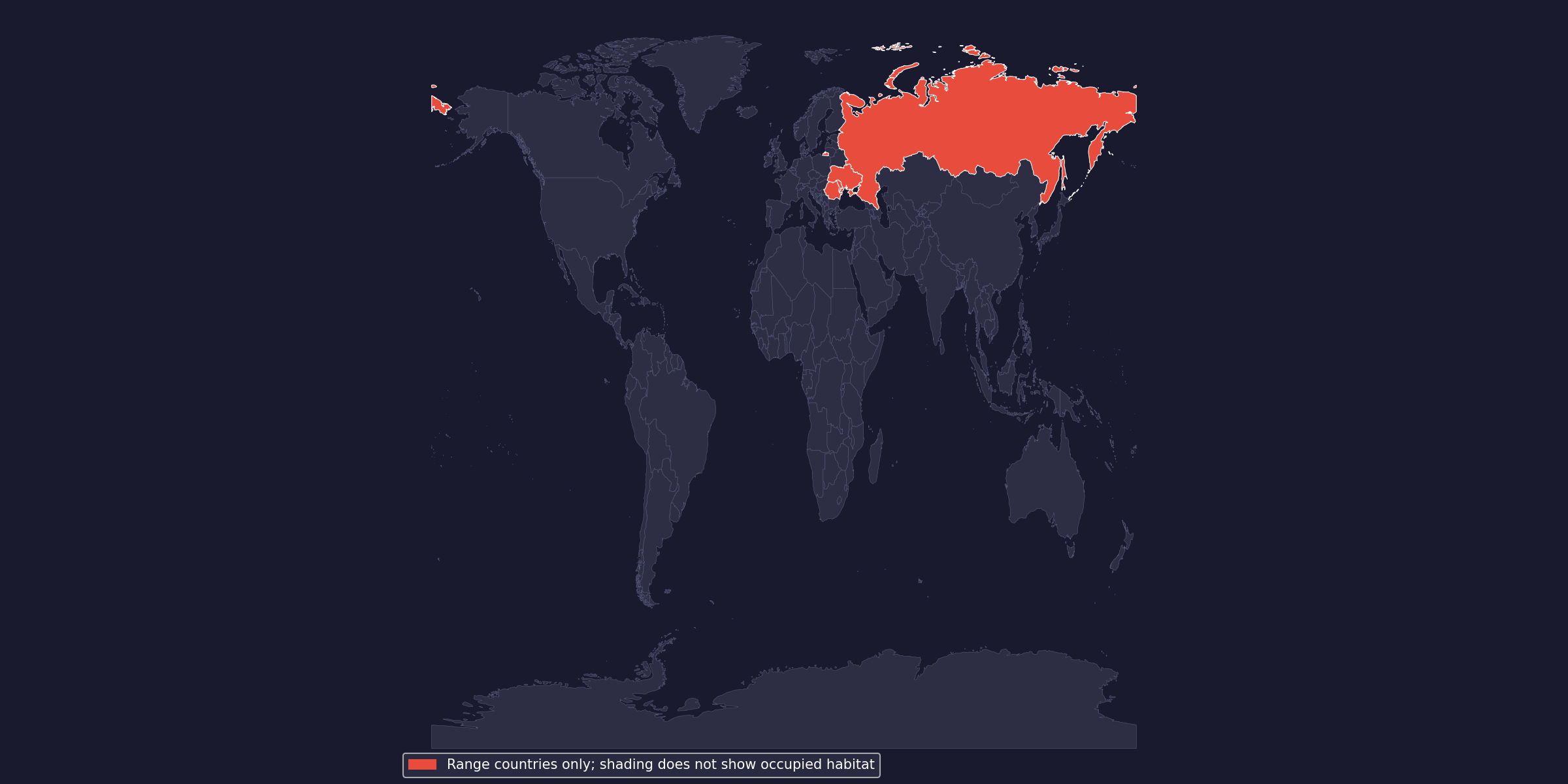
The current species account includes Ukraine, central and southern Russia, Moldova and Romania. Woodland edges, forest-steppe mosaics and damp refuges matter more than a country average. Contact and hybridisation with V. berus complicate western records; keep original identification and collection-locality records with any legal lineage.
🌡 Climate across the native range
Outdoor monthly averages describe seasonal context, not enclosure settings. One locality cannot represent every population.
Balashov forest-steppe — Russia
| Month | Min °C | Mean °C | Max °C | RH % |
|---|---|---|---|---|
| January | -10 | -7.3 | -5 | 86 |
| February | -10.4 | -7.2 | -4.6 | 85 |
| March | -5.8 | -1.8 | 1.7 | 81 |
| April | 2.5 | 8 | 12.9 | 67 |
| May | 9.6 | 15.5 | 20.4 | 62 |
| June | 14.1 | 19.6 | 24.2 | 63 |
| July | 16.5 | 21.9 | 26.5 | 62 |
| August | 15.4 | 20.8 | 25.6 | 59 |
| September | 10 | 14.6 | 19.1 | 64 |
| October | 4 | 7.5 | 11 | 74 |
| November | -2.6 | -0.1 | 2.2 | 81 |
| December | -7.7 | -5.3 | -3 | 85 |
Weather data by Open-Meteo.com · CC BY 4.0 · Monthly normals calculated by Herpeton Academy from daily archive values.
Location references use GBIF.org occurrence data where available; original occurrence records retain their source dataset licenses.
⚖️ Legal status
Checked 17 September 2026. No specific CITES or EU wildlife-trade annex entry was found for the accepted species name. Listing scope must also be checked under the older names described above. Trade status does not authorise capture or possession: national protection, dangerous-animal licensing, import, registration, transport, breeding and sale restrictions can still apply. Keep breeder identity, invoice, parentage, locality and transfer/import documents; obtain written authority advice before any uncertain transfer.
The Bern Convention Appendix III general reptile provision applies; neither nikolskii nor berus appears in the reviewed Appendix II viper entries. National protection can nevertheless be stricter.
🤌 Husbandry
Use contrasting service surfaces and check the shift compartment visually before opening any enclosure: a black snake resting under cover can be missed.
House individually in a locked enclosure inside a locked, escape-resistant room. A lockable shift compartment must permit visual confirmation and isolation before water changes or cleaning. Have trained backup staff, a written escape plan and a reptile veterinarian ready. No free handling or improvised restraint.
Use at least 90 days of separate quarantine as a working minimum, extended by the veterinarian when needed. Start with paper substrate and dedicated tools; record feeding, sheds, faeces and body condition. Unknown-origin animals, weight loss or abnormal stools justify veterinary assessment and parasite testing. Obtain weights only by an established protected procedure.
💡 Lighting
Provide 12–14 hours of visible light in the active season and darkness at night. Keep full shade available. No species-specific UVB optimum is established; if low-level UVB is used, measure exposure and review the arrangement with the veterinarian using the UV-Tool reference. Guard lamps and adjust seasonal day length gradually, in step with the approved winter plan.
🌡 Heating and temperature
Use the separate air, surface and cool-retreat values in the table as provisional starting points. Thermostat-controlled, guarded heating should warm only part of the enclosure. Measure the basking surface and both retreats independently; check the coolest area during summer room-temperature peaks. A heater thermostat cannot correct an overheated room.
Jandzik (2007) reported 22–28°C daytime conditions and 18–22°C nights. The narrower air band and moderate basking surface here are cautious management choices, not a reproduction of the entire experimental setup. The report supports seasonal care, but its small sample cannot establish universal limits.
Winter dormancy needs a locality-specific protocol for established healthy adults: preparation, hydration, monitoring and return to feeding must be agreed in advance. Do not copy sub-zero outdoor averages into a refrigerator. Newly acquired, thin, sick or gravid snakes must not undergo routine cooling; juveniles need their own plan. A universal brumation temperature or duration is deliberately not prescribed.
💧 Humidity and water
Measure relative humidity near the resting animal, using the table as a provisional band. Keep a slightly moist refuge alongside dry resting surfaces; avoid wetting the whole floor. Ventilation and local moisture are more useful than chasing a single percentage. Supply fresh water continuously in a stable bowl, serviced only after isolation. Persistent poor sheds require a hydration and health review, not forced soaking or peeling.
🌿 Enclosure and decoration
Give the snake enough uninterrupted floor length to stretch fully. Secure ventilation mesh, doors and cable entries, checking gaps against the smallest animal present. Place cover in both thermal zones and fix stones against collapse. After quarantine, 5–8 cm of compactable soil mixed with washed sand, with a little leaf litter, can provide firm footing and local moisture. Keep most of the surface dry. Avoid sharp gravel, aromatic wood and inaccessible cavities; paper remains useful for sick animals.
🐁 Feeding
For an established adult accepting rodents, begin with one modest thawed whole mouse every 10–14 days in the active season. Juveniles may need smaller meals every 7–10 days. Forest-steppe seasonality does not justify feeding to obesity before winter. Record refusals alongside temperatures, reproductive state and body condition; do not assume every refusal is normal dormancy.
Keep whole vertebrate prey no wider than the snake’s widest body section and offer it through the established protected feeding system. Avoid live rodents, substrate-coated food and disturbance after meals. Oversized prey, dehydration and inadequate warmth increase digestive problems and substrate-ingestion risk. Routine dusting is not normally needed for a complete whole-vertebrate diet; mixed and insect-based diets need their own veterinary plan. Never force-feed at home.
🥚 Breeding
This viper bears live young; there is no egg-incubation schedule. Sex should be confirmed by an experienced professional, not home probing. Breed only mature, healthy animals with documented parentage and locality; no defensible universal age threshold was found for these lineages. Keep locality lines separate. Before pairing, prepare individually secured neonatal housing, a protected separation procedure and lawful placements; small newborns are venomous and can escape through much smaller gaps.
🩺 Common problems
Persistent exposed resting or attempts to escape the warm zone warrant an immediate temperature check. Wheezing, bubbles or open-mouth breathing suggest respiratory disease; abnormal belly scales may indicate dermatitis. Repeated poor sheds, regurgitation, weight loss or abnormal faeces require a reptile veterinarian to distinguish dehydration, dietary problems, parasites and other illness. Do not deworm or restrain a venomous snake yourself; arrange secure professional transport.
📌 Conclusion
The essential preparations are a cool, covered enclosure and a hospital-agreed bite plan that identifies the animal as nikolskii, including its older berus name.
📚 Sources and further reading
ReptiFiles was checked first on 17 September 2026; no species-specific guide was found. Older husbandry reports inform comparison, not modern handling, drug treatment or blanket reproduction instructions.
- Reptile Database: Vipera nikolskii
- GBIF: Vipera nikolskii
- Neurotoxic phospholipases: experimental research
- 2026 antivenom variability study
- ReptiFiles
- Jandzik (2007), Husbandry and captive reproduction in Vipera nikolskii
- Luiselli (1990), Captive breeding of Vipera ursinii ursinii
- Venom proteomics: nikolskii, orlovi and renardi
- WHO: snakebite treatment
- CITES Appendices
- EU Regulation 2026/1383
- Bern Convention: appendices
- Bern Convention Appendix II
- Bern Convention Appendix III
- Baines et al. (2016), UV-Tool
- DAERA: keeping venomous snakes