Share

Vampire Crab
🔤 Taxonomy
Geosesarma dennerle was described in 2015 from Java. “Vampire crab” is also applied to other Geosesarma, including G. hagen. Do not treat every colour sold under that common name as this species or mix unidentified crabs.
📌 Description
Adults have a carapace about 1.5–2.5 cm wide; leg span is greater. They are small terrestrial hunters associated with freshwater margins, not fully aquatic aquarium crabs. Plan for roughly 2–3 years, with uncertainty for wild-collected adults.
| Parameter | Practical reference |
|---|---|
| Adult size | 1.5–2.5 cm |
| Lifespan (years) | 2–3 |
| Enclosure (L × W × H) | 60 × 45 × 45 cm |
| Daytime air | 24–26 °C |
| Night | 22–24 °C |
| Humidity | 75–90% |
🌍 Distribution
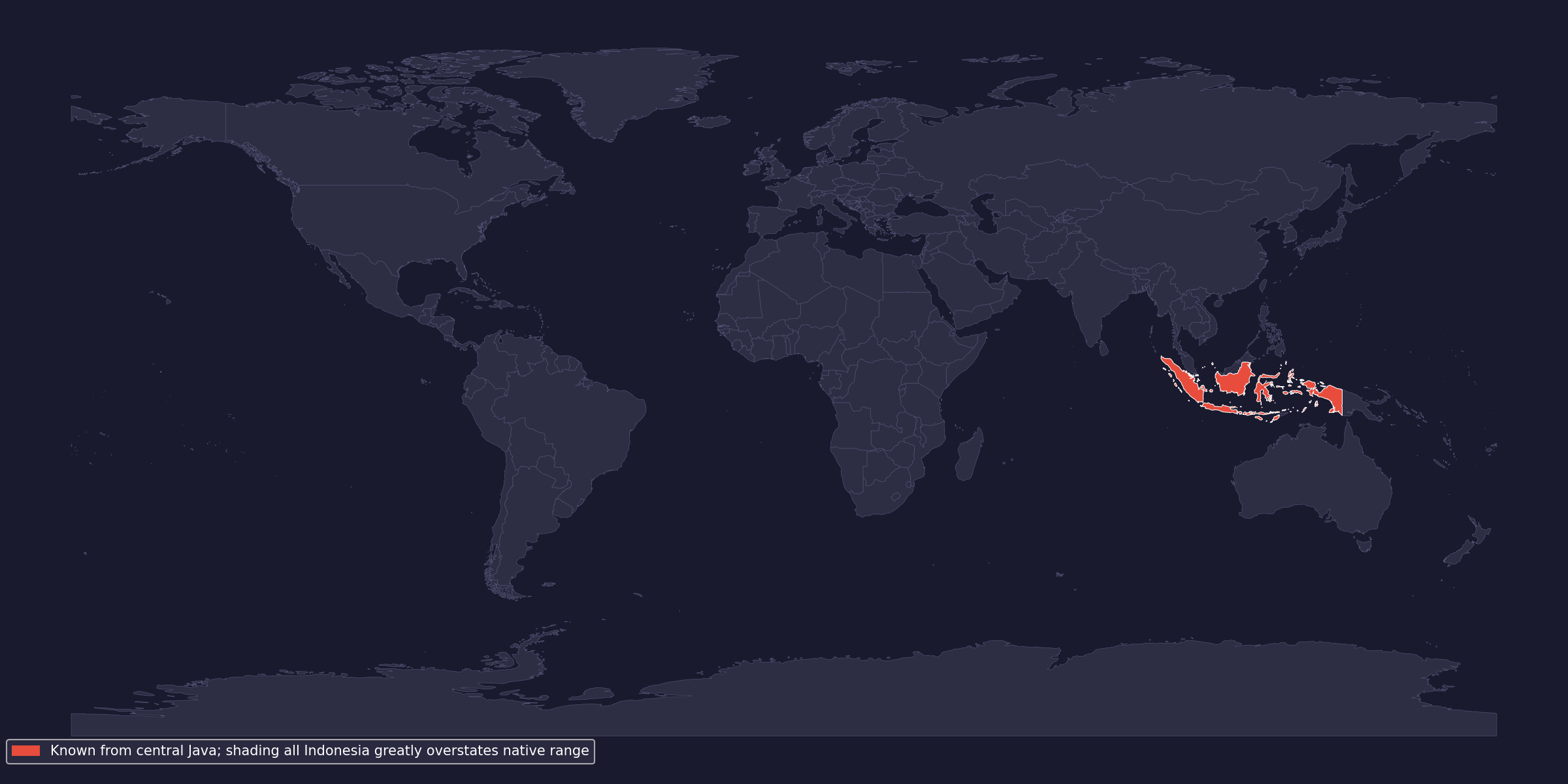
The described native locality is near Cilacap in central Java, Indonesia. The country map greatly exaggerates the actual known range. Shaded streamside ground, cover and access to fresh water explain the need for a paludarium with substantial land.
⚖️ Legal status
Checked on 2026-09-17: no listing was found for this species or its encompassing taxa in the CITES Appendices or the EU wildlife-trade annexes. The Bern Convention is not relevant to its native range. National rules can still restrict keeping, import, transport or sale. Retain identification and origin records, check destination rules before any transfer, and never release animals or eggs.
🤌 Husbandry
Start with a securely covered 60 × 45 × 45 cm paludarium with roughly 80% usable land and 20% water. One animal can be kept separately; a carefully monitored small breeding group requires multiple territories and spare housing. Never combine males in a cramped setup. Quarantine arrivals separately with their own land, water and tools before any introduction.
💡 Lighting
Provide about 12 hours of diffuse light for plants and a dark night. UVB has not been established as necessary. Thick leaf cover must let crabs forage without crossing an exposed bright area. Avoid hot lamps close to the land surface.
🌡 Heating and temperature
Maintain air around 24–26°C and nights around 22–24°C; keep water approximately 22–26°C. These are maintenance targets rather than lethal limits. Use thermostatically controlled external heating only if needed. Measure land and water separately; a warm aquarium heater does not ensure suitable air above it.
💧 Humidity and water
Aim for 75–90% humidity with ventilation and moist, unflooded land. Use dechlorinated fresh water, never marine salt. Provide easy textured exits from every pool. Cycle a filtered water section before stocking; ammonia and nitrite must be undetectable. Test weekly and change part of the water with temperature-matched water; small unfiltered dishes need frequent cleaning and replacement.
🌿 Enclosure and decoration
Build at least 5–8 cm of diggable, pesticide-free soil over drainage, with leaf litter, cork cavities and rooted plants. Add several shelters on land and underwater, with visual barriers between them. Support heavy hardscape independently of burrows. Cover filter intakes and all cable gaps; juveniles fit through very small openings.
🪳 Feeding
Offer small portions daily near shelter entrances: cultured small insects, thawed aquatic invertebrates and suitable crustacean food, with some vegetable matter. Leaf litter and microfauna supplement rather than replace feeding. Supply a small clean cuttlebone fragment as a calcium source. Remove remains before they foul the water; do not add copper-based medication or unverified mineral mixtures.
🥚 Breeding
Females have a broader abdominal flap and carry eggs beneath it. Development produces miniature crabs without a free-swimming marine larval stage; do not apply hermit-crab breeding instructions. Keep hatchlings in a separate escape-proof nursery with abundant cover and tiny food, because adults may eat them. Do not strip eggs from a brooding female or impose an unsupported incubation deadline.
🩺 Common problems
A shed exoskeleton can resemble a dead crab. Avoid disturbing a hiding soft animal after a molt. Missing limbs, repeated attacks, failed molts or sustained lethargy require checks of water quality, shelter distribution and food. Separate injured animals in an appropriate humid setup and consult an aquatic/invertebrate-experienced veterinarian; never medicate the whole paludarium blindly.
📌 Conclusion
Choose this species for a land-dominated freshwater paludarium. Accurate identification, escape prevention and water testing matter more than adding tankmates.
📚 Sources and further reading
- Ng, Schubart & Lukhaup — original description (2015)
- OATA — freshwater crab husbandry and water quality
- NAC Magazine — Geosesarma dennerle
- GBIF — Geosesarma dennerle
- CITES — official appendices, government publication (2026)
- EU — Regulation 338/97, consolidated 2026-06-29
- Bern Convention — appendices