Share

Indian Stick Insect
🔤 Taxonomy
Carausius morosus, also encountered as Dixippus morosus, is PSG culture number 1. The familiar captive culture reproduces by parthenogenesis: females can produce offspring without males. This is not the same species as the larger Vietnamese stick insect, Medauroidea extradentata.
📌 Description
Females are usually about 7–9 cm long, excluding the legs, and resemble slender twigs. Allow roughly 9–18 months for the complete life cycle, with substantial variation. The main commitments are a year-round supply of safe leaves and control of unwanted eggs, not live insect food.
| Parameter | Practical reference |
|---|---|
| Adult size | 7–9 cm |
| Lifespan (years) | 0.75–1.5 |
| Enclosure (L × W × H) | 30 × 30 × 45 cm |
| Daytime air | 20–24 °C |
| Night | 18–21 °C |
| Humidity | 50–70% |
🌍 Distribution
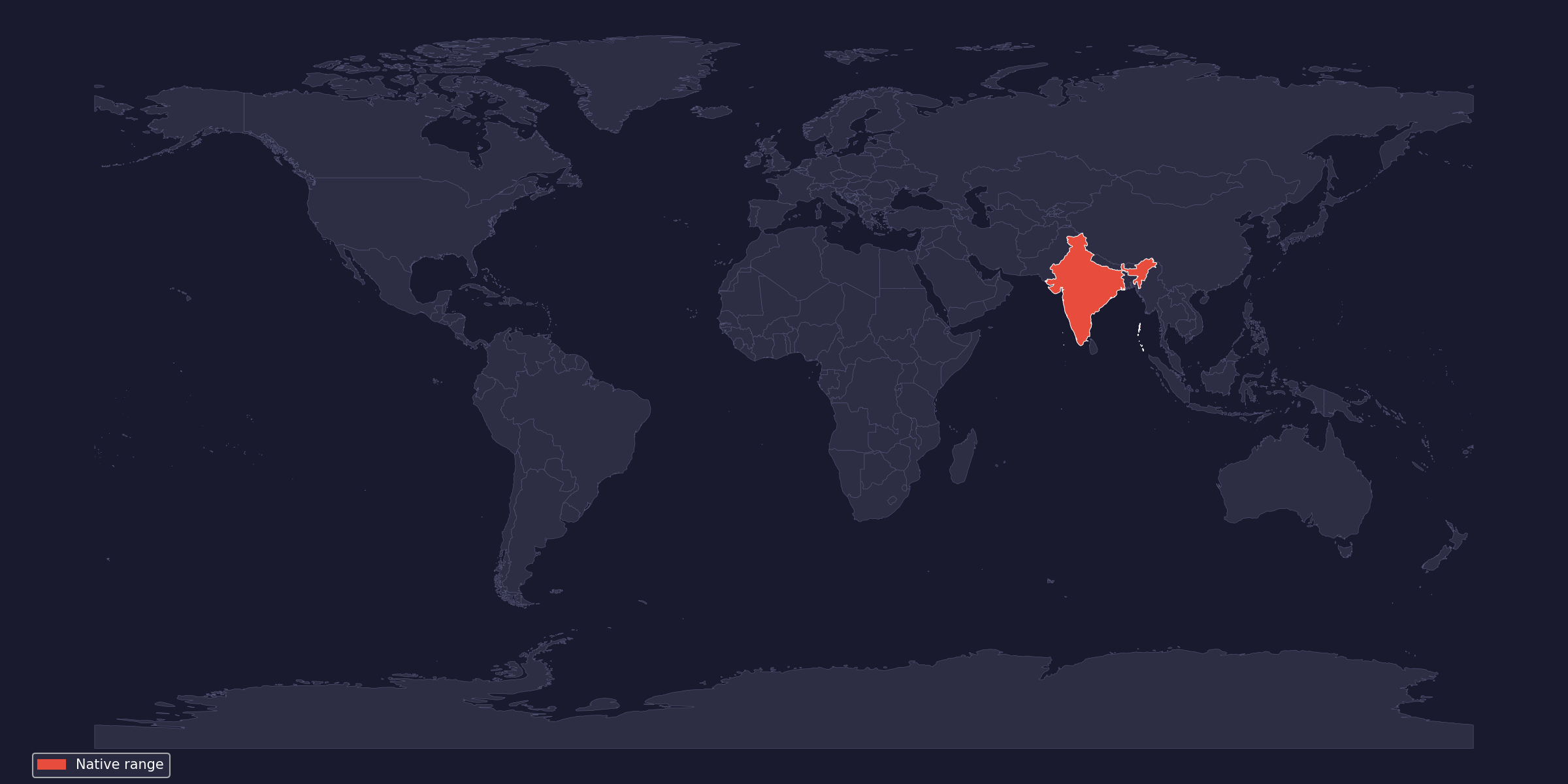
The established culture traces to Tamil Nadu, southern India. Introduced populations outside its native region must not be used to infer a wider native range. Eggs hidden in discarded leaves or substrate are an escape route even when the adults cannot fly.
⚖️ Legal status
Checked on 2026-09-17: no listing was found for this species or its encompassing taxa in the CITES Appendices or the EU wildlife-trade annexes. The Bern Convention is not relevant to its native range. National rules can still restrict keeping, import, transport or sale. Retain identification and origin records, check destination rules before any transfer, and never release animals or eggs.
🤌 Husbandry
Use a 30 × 30 × 45 cm ventilated enclosure for a small group, reducing numbers if animals crowd the hanging sites. Height must remain at least three body lengths after foliage is installed. Separate new stock for several weeks and inspect food intake, droppings and molts. Move animals by letting them step onto a twig; pulling a leg can cause its loss.
💡 Lighting
Provide a normal 12-hour light cycle and darkness at night. Special UVB is not established as necessary. Avoid direct sunlight through glass. The room can provide sufficient diffuse light if the enclosure has a clear day/night rhythm.
🌡 Heating and temperature
Aim for 20–24°C by day and 18–21°C at night. A stable heated room is usually simpler than heating a small cage. If supplementary heat is needed, use a thermostat and leave a cooler area. Do not deliberately chill eggs or animals to delay development without a species-specific protocol.
💧 Humidity and water
Maintain moderate humidity, approximately 50–70%, with ventilation. Lightly mist some leaves for drinking when needed, allowing them to dry between applications. Waterlogged paper and persistent condensation are unnecessary. Cover the water container holding cut branches so no nymph can fall in and drown.
🌿 Enclosure and decoration
Provide upright food branches and clear space below the ceiling for molting. Paper on the floor makes eggs and droppings visible; a thin 1–2 cm clean substrate layer is optional. Inspect every branch before replacing it because tiny nymphs resemble leaf stalks. Avoid sharp wire, sticky tape and overcrowded foliage.
🪳 Feeding
Keep fresh, pesticide-free bramble, rose or suitable privet available continuously. The PSG also records ivy among accepted foodplants for this species; do not generalize that choice to other animals. Wash leaves, avoid sprayed gardens and roadside collecting, and replace wilted stems. Inspect chewing marks daily: newly hatched nymphs may need tender leaf edges. Reptile calcium and vitamin powders are unnecessary.
🥚 Breeding
Females drop seed-like eggs among the waste. Keep only the number you can rear in a labeled, ventilated container with lightly moist material, not standing water. Hatching takes months and varies with conditions; no single precise incubation interval is promised here. Account for eggs during every clean. Do not compost viable eggs or give cultures away without identification and local-rule checks.
🩺 Common problems
Failed molts usually call for checking hanging clearance, crowding and drying conditions. Persistent food refusal with few droppings suggests unsuitable or contaminated leaves. Several animals becoming weak together warrants immediate investigation of pesticide exposure and a change to verified safe food. Do not pull off old skin; seek an invertebrate-experienced veterinarian for injury, leakage or sustained decline.
📌 Conclusion
This species is manageable when safe foliage remains available through winter. Plan surplus-egg handling before the first female matures: absence of a male does not prevent reproduction.
📚 Sources and further reading
- Phasmid Study Group — PSG 1
- Amateur Entomologists’ Society — stick insect care
- Phasmida Species File — Carausius morosus
- GBIF — Carausius morosus
- CITES — official appendices, government publication (2026)
- EU — Regulation 338/97, consolidated 2026-06-29
- Bern Convention — appendices