Share

Viper Gecko
🔤 Taxonomy
Hemidactylus imbricatus belongs to Gekkonidae. Older literature uses Teratolepis fasciata; the common name “viper gecko” does not imply venom.
📌 Description
This small ground gecko has strongly overlapping scales and a swollen, tapering tail. Adults measure about 8–10 cm including the tail; plan for 10–15 years of care. It is an observation animal: its speed and delicate body make routine handling unsuitable.
| Parameter | Practical reference |
|---|---|
| Adult size | 8–10 cm |
| Lifespan (years) | 10–15 |
| Enclosure (L × W × H) | 60 × 45 × 45 cm |
| Basking surface | 33–35 °C |
| Cool zone | 24–29 °C |
| Night | 21–24 °C |
| Humidity | 30–50% |
🌍 Distribution
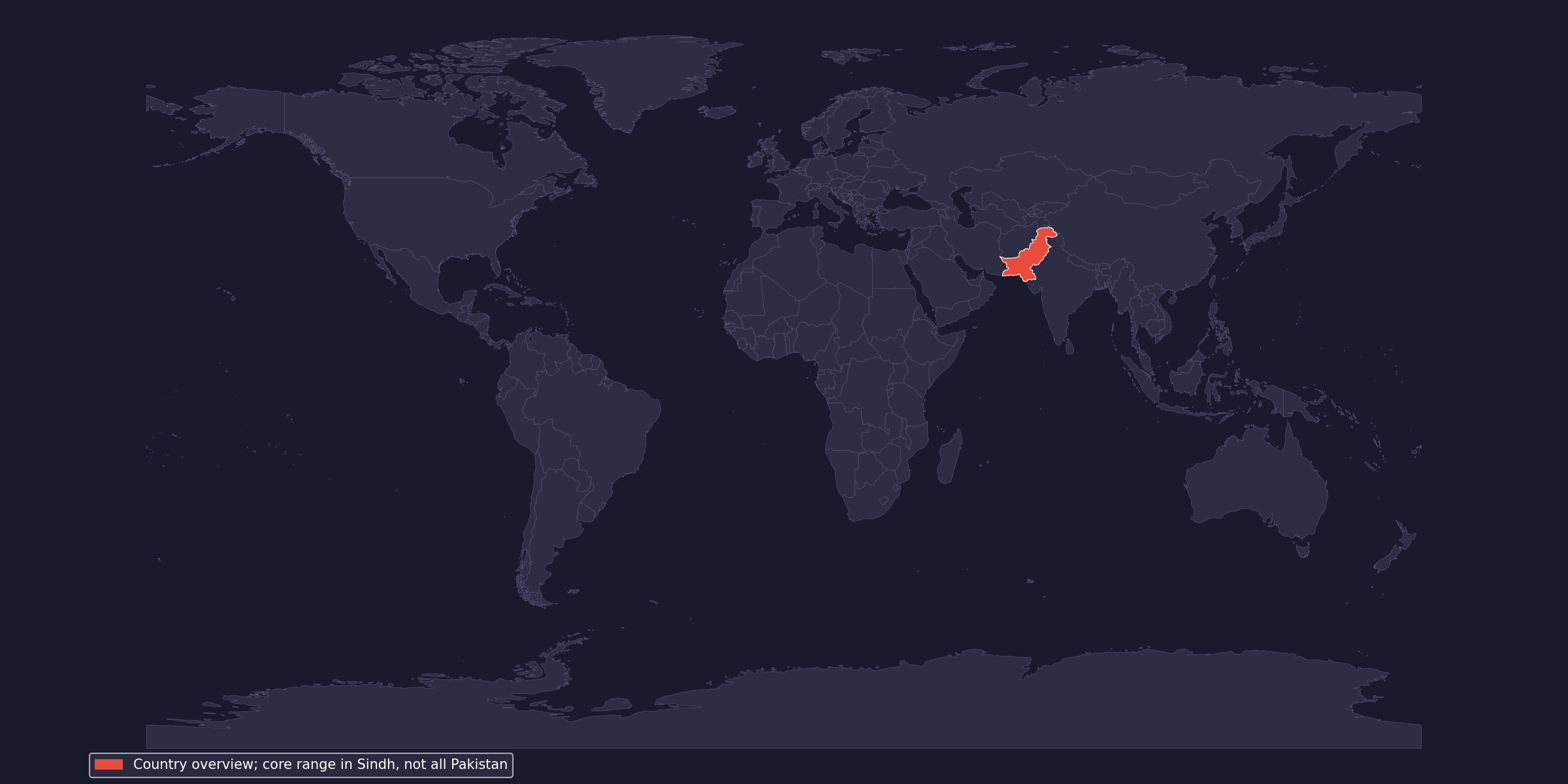
The reliable core range is Sindh, Pakistan, in dry, rocky habitats. The Reptile Database flags historical Indian and Sri Lankan records as probably erroneous. The country map is an overview, not a claim that all Pakistan is occupied.
🌡 Climate across the native range
Regional outdoor climate at a representative locality. These air-temperature averages are habitat context, not enclosure settings or temperatures inside shelters.
Sindh, Pakistan — Hyderabad region
| Month | Min °C | Mean °C | Max °C | RH % |
|---|---|---|---|---|
| January | 11 | 17.3 | 24.1 | 54 |
| February | 13.5 | 20.3 | 27.5 | 48 |
| March | 18.4 | 25.7 | 33.1 | 41 |
| April | 23 | 30.4 | 38.4 | 40 |
| May | 25.9 | 32.7 | 40.9 | 50 |
| June | 27.6 | 32.9 | 39.6 | 58 |
| July | 27.3 | 31.3 | 36.8 | 65 |
| August | 26.1 | 29.8 | 35 | 69 |
| September | 25 | 29.6 | 35.6 | 64 |
| October | 22.5 | 28.8 | 35.9 | 48 |
| November | 17.3 | 23.7 | 30.9 | 48 |
| December | 12.5 | 18.7 | 25.7 | 53 |
Weather data by Open-Meteo.com · CC BY 4.0 · Monthly normals calculated by Herpeton Academy from daily archive values.
⚖️ Legal status
Checked on 2026-09-17: no listing was found for this species or its encompassing taxa in the CITES Appendices or the EU wildlife-trade annexes. The Bern Convention is not relevant to its native range. National rules can still restrict keeping, import, transport or sale. Retain identification and origin records, check destination rules before any transfer, and never release animals or eggs.
🤌 Husbandry
Provide a ventilated 60 × 45 × 45 cm enclosure for an adult. A single animal simplifies feeding and health monitoring; experienced keepers sometimes maintain compatible groups, with extra hides and immediate separation if competition occurs. Never house males together. Buy established captive-bred juveniles and quarantine new arrivals separately. Use a simple, easily inspected quarantine setup for about 90 days, adjusted with veterinary advice; record food intake, weight and faeces, and arrange faecal testing when indicated.
💡 Lighting
Use a 12-hour daytime cycle and darkness at night. Provide low-level UVB with approximately UVI 1–2 at an accessible exposed position and complete shade in retreats. Measure at gecko height; mesh and lamp distance alter exposure. A lamp percentage alone cannot specify the dose.
🌡 Heating and temperature
Aim for a 33–35 °C basking surface, a 24–29 °C cool area and 21–24 °C at night. Heat one end from above, using a dimming thermostat and guarded equipment. Check surfaces with an infrared thermometer and air with fixed probes. Avoid heated rocks and a uniformly hot enclosure.
💧 Humidity and water
Keep general daytime humidity around 30–50%, while maintaining a separate damp hide throughout the year. Provide a small, shallow bowl of fresh water and clean it daily. The moist hide should have damp substrate without standing water; do not saturate the whole floor to solve shedding problems.
🌿 Enclosure and decoration
Use roughly 5 cm of compactable, fertilizer-free soil and sand, with stable low rockwork and cork shelters at both ends. Set heavy objects on the enclosure base before adding substrate. Seal ventilation gaps against tiny hatchlings and feeder escape. Avoid deep loose sand and sharp gravel. During quarantine, use easily replaced paper and a separate moist hide. Feed from a clean dish where practical: swallowed substrate, dehydration and insufficient heat can contribute to impaction.
🪳 Feeding
Offer appropriately small, gut-loaded crickets, roaches and other cultured insects. Feed adults every 2–3 days, adjusting portions to body condition; juveniles need smaller meals daily or every other day. Dust prey with calcium and use a reptile multivitamin according to its label and the UVB arrangement. Remove uneaten biting prey; waxworms are occasional treats. Choose prey no wider than the space between the eyes; offer smaller items if swallowing looks difficult. With effective measured UVB, use plain calcium for routine dusting and obtain D3 from a coordinated, label-directed vitamin plan; without effective UVB, dietary D3 needs deliberate provision. Do not stack D3 products.
🥚 Breeding
Females can produce repeated pairs of eggs, which can rapidly deplete their reserves. Breeding needs a moist laying site, a separate hatchling enclosure and reliable tiny feeders. Published breeders report hatchling losses and variable incubation outcomes; do not present a single temperature as a guaranteed sex or survival setting.
🩺 Common problems
Track weight and tail condition. Retained toe shed, a thinning tail, weakness or declining appetite warrant an environmental check and reptile-veterinary assessment. Do not pull attached skin or medicate presumptive parasites without diagnosis. Weak jaws and poor grip can indicate metabolic bone disease; repeated straining or abdominal swelling may indicate obstruction or egg binding. These require veterinary diagnosis, not extra supplements or home extraction.
📌 Conclusion
A dry, ventilated enclosure with a moist retreat, measured heating and consistently small prey meets this gecko’s central needs. Compare its care with the knob-tailed gecko, while keeping species-specific settings.
📚 Sources and further reading
- ReptiFiles — viper gecko care
- Sarah Dickenson — firsthand husbandry and breeding
- The Reptile Database — taxonomy and range caveat
- Baines et al. (2016) — UV-Tool
- GBIF — Hemidactylus imbricatus
- CITES — official appendices, government publication (2026)
- EU — Regulation 338/97, consolidated 2026-06-29
- Bern Convention — appendices